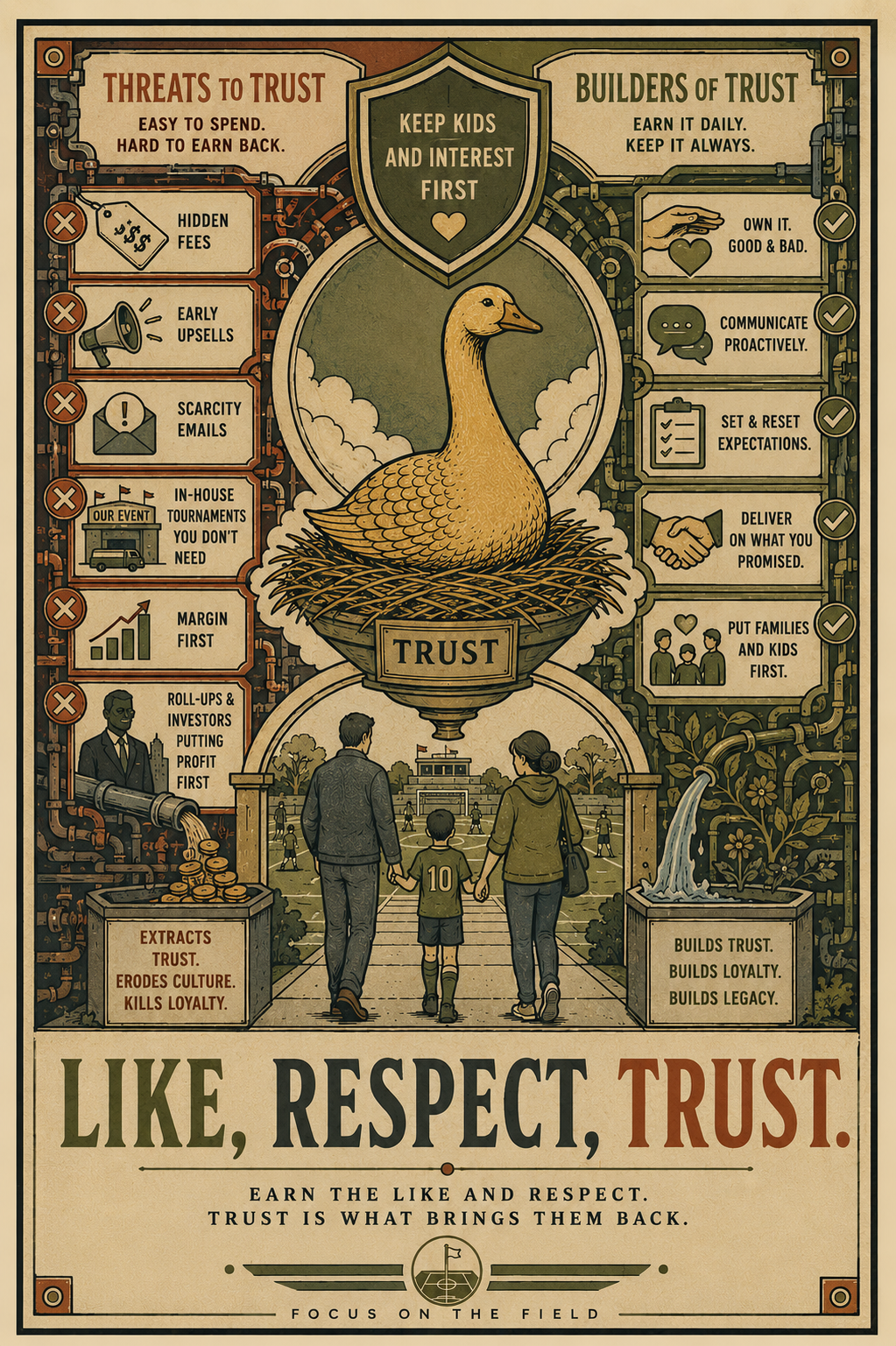
You think you sell registrations, field time, and matching warmups. You sell one thing, and it is trust.
Every kid you serve comes with two more buyers attached, and each wants something different. Underneath, they are buying the same promise: that you keep the buyer's kid and interest at the front of every decision. That sounds antiquated next to scouting combines for twelve-year-olds and personalized pee-wee bats, but under the noise the decision still runs on trust. Their earned trust is the whole product. Everything else is packaging you charge for.
Earning it means understanding the buyers and their order. The first is the “kid”, and they have to like whatever you're selling. They are the gatekeeper, and a bored kid ends the sale before the dad can figure out what caught his eye.
The second is “dad”, and they have to respect you. They want coaches who look like they've done this before, an app that doesn't crash when a roster changes, and bathrooms that don't require a hazmat suit. Flunk the basics and you never earn their respect, and without it you never reach the one who actually decides. That's “mom”.
Mom is the hardest to sell, but the most loyal should you serve them well. You can do everything right on the field, and the first time they smell a machine built to upsell them before you've delivered a thing, they are gone, and they take the trust with them. A kid can love you and a dad can respect you, and you will still get exactly one season out of that family. Trust is what brings the whole family back, so guard it with conviction.
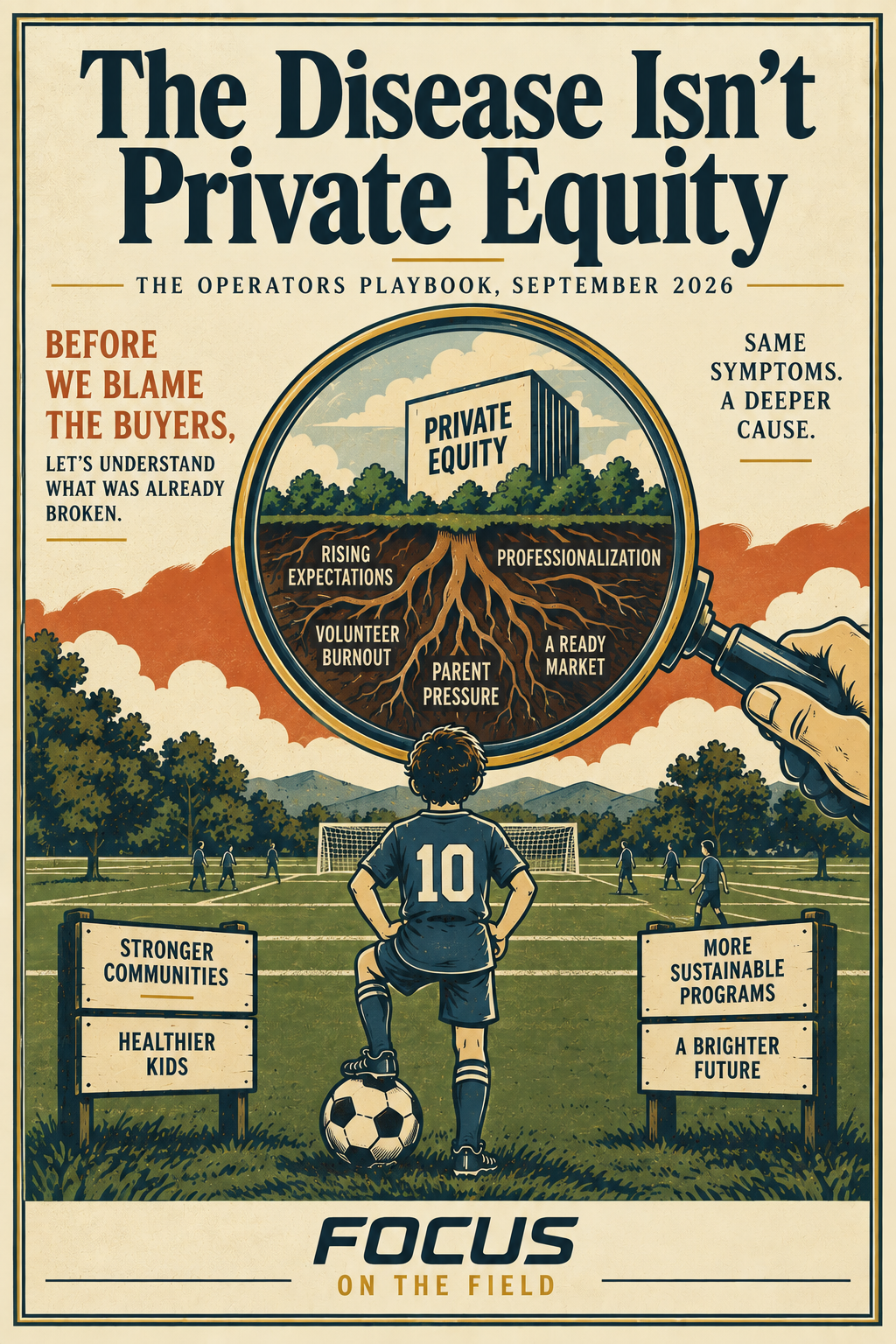
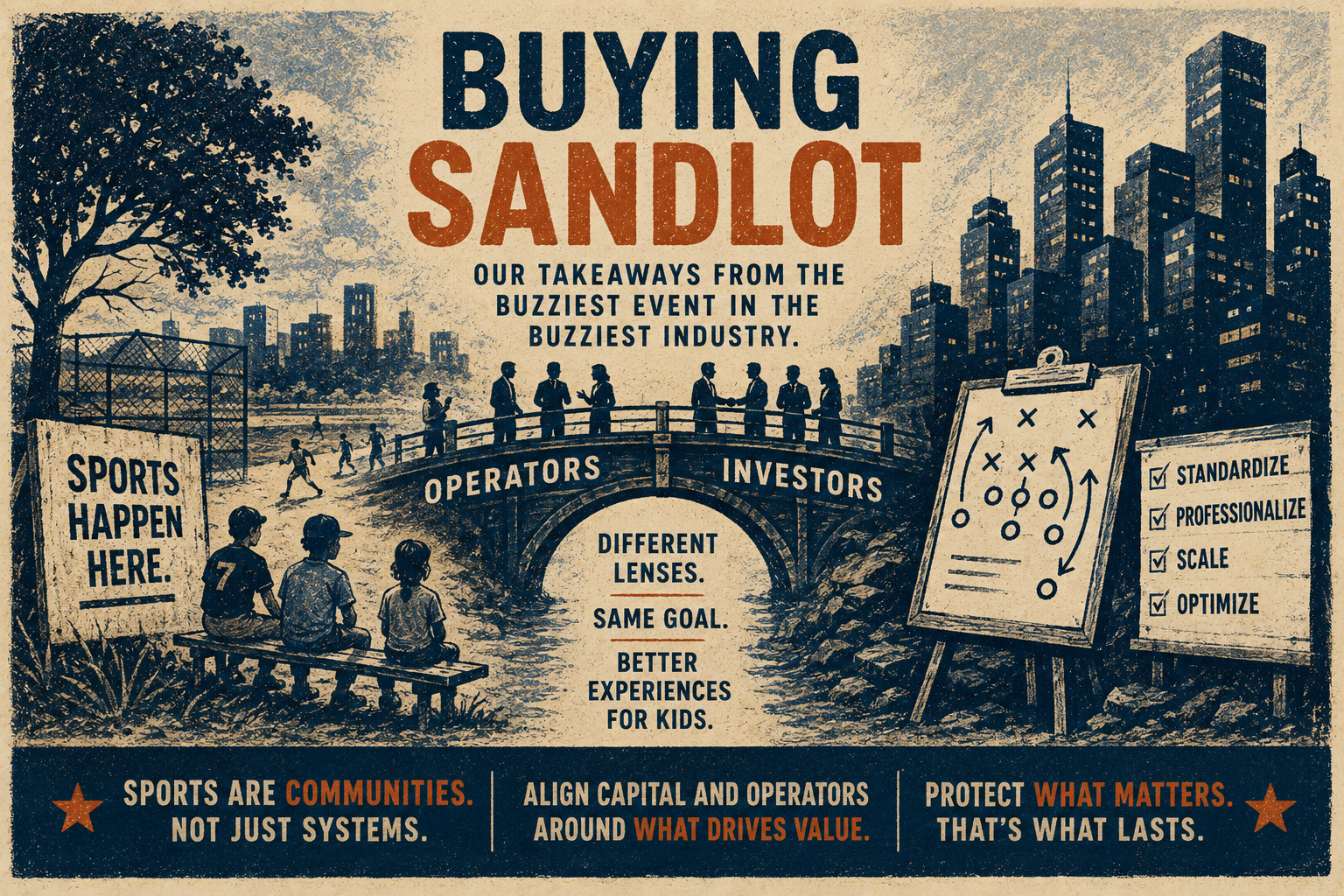
This is the formula new investors miscalculate. The folks from the glass office have "discovered" youth sports the way Columbus "discovered" a populated continent. They found fragmented but sticky revenue and a captive customer who would sell a kidney before telling their kid they can't play. What their spreadsheets don’t price is the trust holding the whole thing up, so nothing in the model moves to ensure it endures. On paper you roll up platforms, consolidate vendors, and run it lean. If you do that carelessly, you eat the trust this industry stands on.
It is easy to misunderstand trust and spend it without noticing. The fees that only show up at checkout, the upsells that start before the kid has touched a field, the scarcity emails sent out while those on the sideline see empty spots on the bench, the in-house tournaments you're pushed to travel to when the local event is a better call. None of these look fatal on a spreadsheet, but in action it is death by a thousand convenience fees.
For those who have burned trust, rebuilding it is simple, though not easy. You start by owning every decision, especially the ones that cost you. You take the dirt and grief and own the disappointment you have caused, then you communicate until you're sick of it. You fill every void with information and explanations, because where you leave space it will be filled with negativity. Set expectations, reset them, and overdeliver where you can, knowing the gap between what you promised and what you delivered is where disappointment lives.
I harp on this because every trust withdrawal is from the same cultural account, and past a certain balance the culture stops extending credit. Youth sports sits near this inflection point. While it still holds a special place in most parents' minds as a good they want to keep, nothing guarantees it stays that way.
There’s no law saying youth sports can't curdle into the next Toddlers and Tiaras, a spectacle that makes people wince at what adults will do to kids for money. It’s a plausible scenario with the money involved. Rolled-up operators chase margin to hit investor targets and go pageant-mom on their own families. Or the capital optimizes the exploitation at scale and leaves behind a game only the suckers and the desperate still play. Cross that line and the industry's reputation doesn't dent, it flips. The people who cheered start to sneer, and no parent wants to be looked at as exploiting their own kid.
I still believe in the magic of youth sports, which is why guarding the trust is the operator's job now more than ever. We've stepped on this rake plenty, earned the trust and lost it, so this isn't a sermon from the mountaintop as much as a warning from the mud.
This golden goose has survived Little League dads, travel-ball grifters, and forty years of trophy inflation. If we collectively get this right, our goose keeps laying for everyone, even those just discovering this new industry. What it might not survive is being loved by people who only love what it lays.
Tyler Kreitz
Founder and CEO